
Pure Lone Working
Silence is the alarm.
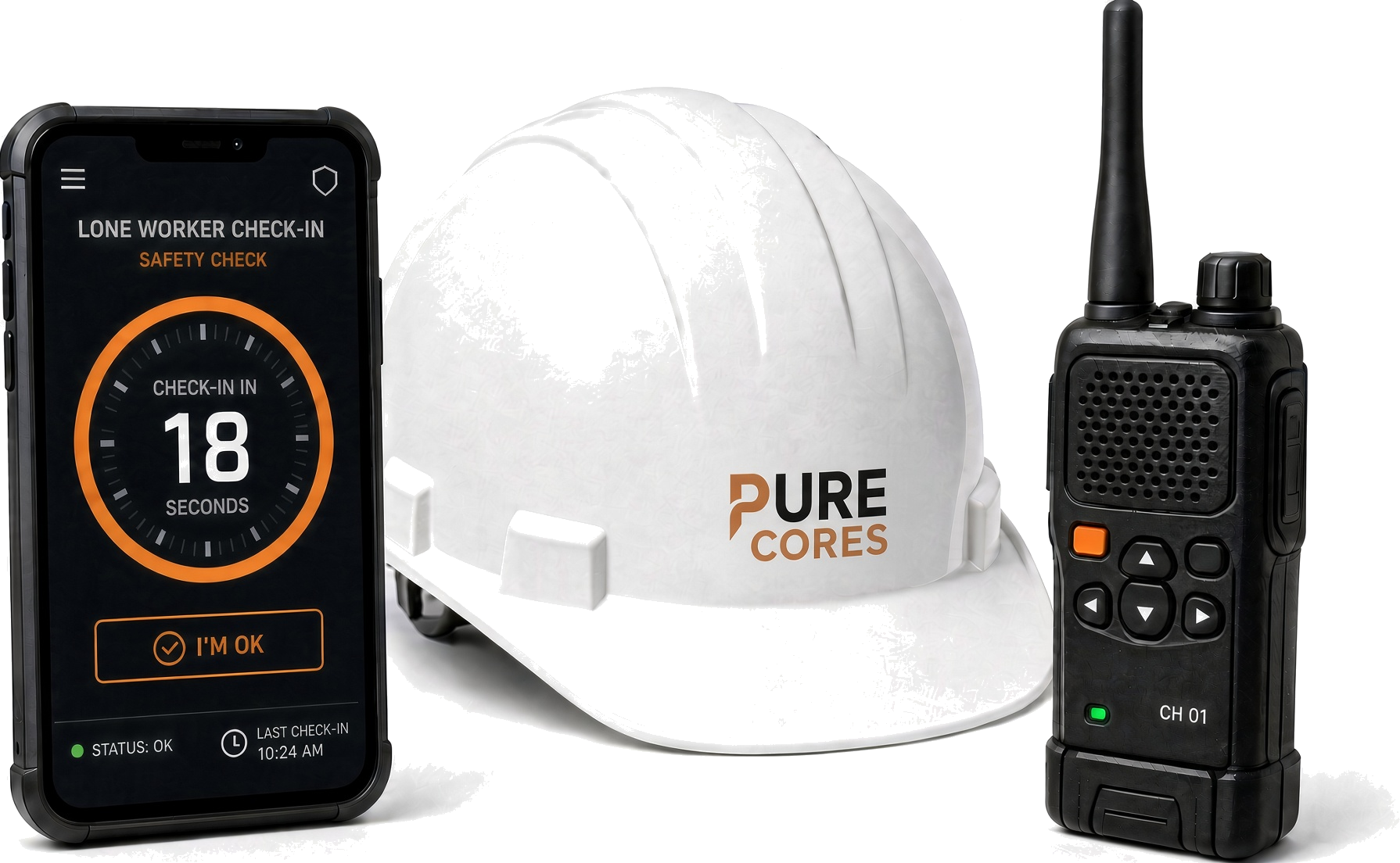
A session for someone working alone. Tied to a risk assessment. They check in on a timer the server holds. If they go quiet, or they raise an SOS, the alert climbs to your people. We are not an emergency service, and we do not run a monitoring centre.
The benefit
A named person is always responsible. A missed check-in does not fail quietly.
Assessed before it starts
The session sits on a lone working assessment. The interval, the tasks that are not allowed alone, and the training come from that assessment.
The server holds the timer
A flat or out-of-signal phone still triggers the climb. The phone is only the display. The due time is not on the device.
Your people, not a call centre
The alert goes to the worker, then the supervisor, then the backups. They decide whether to call 999. We do not dispatch anyone.
On the safety record
Sessions, misses, and alerts sit with the risk assessment and the incident file. A serious alert can open a review.
Who it is for
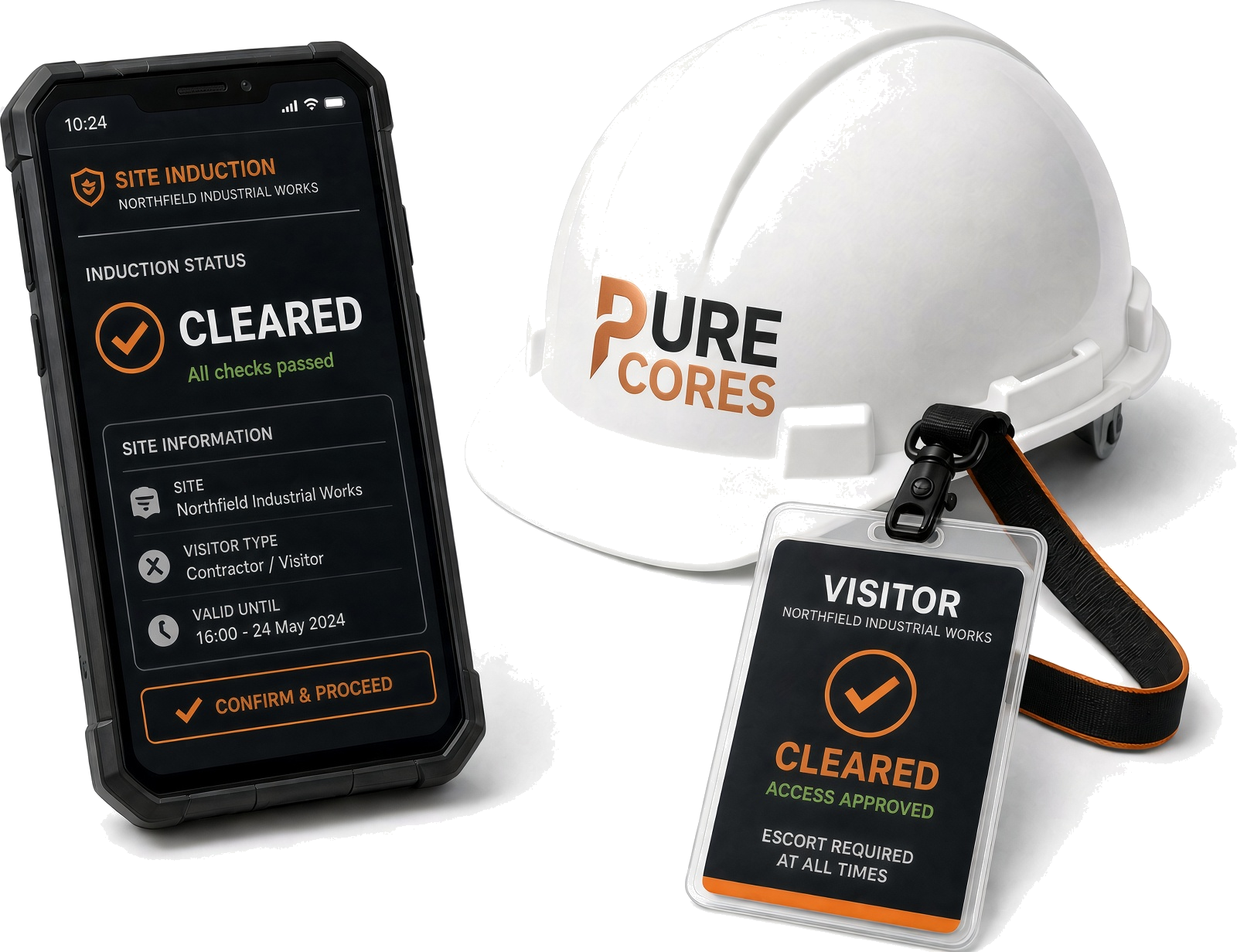
People working without close supervision.
HSE’s INDG73 calls a lone worker someone who works by themselves without close or direct supervision. There is no general ban on working alone. The duty is to think about the risk before they are allowed to.
Opening and locking
A site manager on site before the gang, or after they have gone.
Plant and M&E
An engineer in a plant room, a riser, a basement, or a roof space.
Visits
A surveyor, an assessor, or a clerk of works in an empty building or an occupied home.
Night cover
Security and site wardens on a patrol, out of sight of anyone else.
One person on the job
A small firm or a subcontractor whose person is the only one there.
The two rules
Fail safe. Not an emergency service.
If the system is not sure they are OK, it treats them as not OK and climbs. That is why the server decides a missed check-in, not the phone.
Alerts go to the customer’s own nominated people. They decide whether to call 999. A professionally monitored alarm receiving centre is not part of this. We do not claim BS 8484, and we do not claim a police response.
- 01A prompt on their phone while the window is open. A text if data is poor.
- 02Still nothing: the supervisor or monitor, with the last place.
- 03No answer: the backup contacts. A named person has to take ownership.
- 04They decide the next step, including whether to call 999. We do not.
What the app does
The check-in model from INDG73, on the same record as the assessment and the incident.
Tied to a risk assessment
Lone working does not start on a blank watch.
- Each session sits on a lone working assessment, or a section of the job’s assessment.
- The assessment sets the interval, the tasks that are not allowed alone, and the training that has to be in date.
- Confined space, live electrical work, and the other high-risk tasks can be marked not permitted. A session cannot start for those.
- A review date. An alert or a near miss can open a review on that assessment.
A session
On when they are alone. Off when they are not.
- They pick the site and the activity, and an expected end.
- A pre-start check: battery, notifications, location, and signal. A warning if one is off.
- If the required training has run out, the session can be blocked. The missing course is named.
- They end it with one tap when they are back with people. If they do not, it escalates the same way as a missed check-in.
The check-in
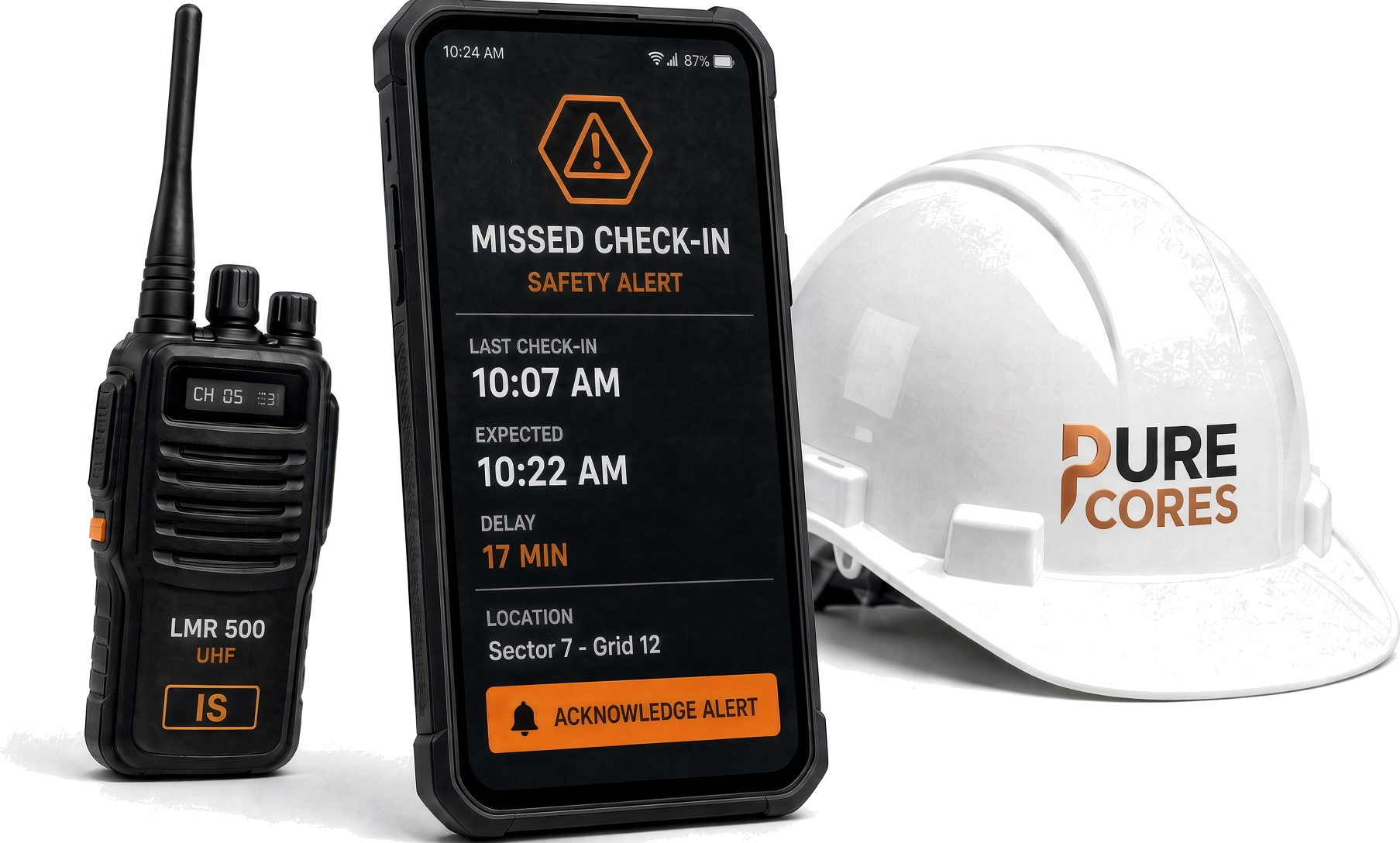
The server decides if they are late. The phone does not.
- The interval comes from the assessment. They can choose a shorter one. They cannot choose a longer one.
- Low, medium, high. Higher risk, shorter window. The figures are starting points, not a legal number.
- A prompt before it is due. One tap to say they are OK.
- A flat, smashed, or out-of-signal phone still triggers the climb. The due time is held on the server.
The climb
Someone always owns the alert.
- First their phone. Then the supervisor or monitor. Then the backup contacts.
- A named person acknowledges it and takes ownership. Until they do, it keeps climbing.
- Push, text, and a voice call. A text can be the check-in where data is patchy.
- We do not run a monitoring centre. Your people decide whether to call 999. We are not an emergency service.
SOS
They do not have to wait for the timer.
- Hold to activate, then a short cancel, so a pocket does not raise it.
- It goes to the supervisor and the backups at the same time, with the last place.
- A cancelled SOS is still logged.
- No signal: the app offers a call, a prefilled text, and 999, and queues the alert for when the mast is back.
Location
Only while the session is on.
- Shared for the watch, and for an alert. Not in the background. Not a find-my-worker.
- The worker can see that sharing is on, and what is collected.
- It stops when the session ends.
- This is not attendance, timesheets, or productivity. We say so.
Poor signal
A plant room is often a dead spot.
- They can mark going out of signal, for a time the assessment allows.
- A check-in made offline is stored with the time on the phone, and sent when the mast is back.
- A reply of OK to the reminder text counts as a check-in.
- The last place is the one that was known, not a blank.
The record
Every session is on the safety file.
- Check-ins, misses, who was told, and who took ownership.
- A serious alert can become an incident, with the timeline already on it. Enough to prepare a RIDDOR. The app does not file it.
- Drills run through the real channels, marked as a test.
- An audit trail. A person can export one alert for an investigation or an insurer.
The duty
What the law asks. What we do not claim.
HSWA 1974
The employer’s duty to employees, and to people not in their employment. The module is one way to show the steps taken for people working alone.
MHSWR 1999
A suitable and sufficient assessment. Arrangements for monitoring. Procedures for serious and imminent danger. The escalation chain is that procedure.
INDG73
HSE guidance, not law. Defines a lone worker. Higher risk, greater supervision. Regular contact, a way to raise the alarm, and a check they got back.
RIDDOR 2013
A lone working incident may be reportable. The alert can become an incident. The app prepares the record. It does not file it.
UK GDPR
Location is personal data. Collected only during a session, used for safety, and stopped when the session ends. Not covert. Not a tracker.
Not BS 8484
We are an employer-monitored system. We do not claim BS 8484, an alarm receiving centre, or a prioritised police response.